Melek Ismail was born in 1987 in Komotini, Greece, and grew up in North Rhine-Westphalia. She lives and works in Hesse, Germany. As a Western Thracian, her practice is rooted in a cultural space stretching from Southeast Europe through Anatolia and the eastern Mediterranean to the Near East, the region where the preparation of mocha and the reading of sediment has remained a living, shared cultural practice across generations.
Melek Ismail is an artist, architect, and philanthropist. Her artistic practice is Mocca Art, a ritual-based material art that she developed and comprehensively documented in 2026 in the eponymous position book, which establishes the conceptual foundation, work logic, taxonomy, and art-historical positioning of the practice.
Since 2024 Melek Ismail has been exhibiting regularly. Her works are held in private collections as well as in institutional contexts, among them the Royal Thai Consulate-General in Frankfurt am Main and the Sparkasse Marburg-Biedenkopf.
In 2024 Melek Ismail organized and coordinated the international charity vernissage Peace Art Exhibition, Rituals of Stillness, at Schloss Dillich, which brought together over 1,500 invited guests from the worlds of art, diplomacy, and society.
Alongside her own practice, Melek Ismail initiates and coordinates intercultural art projects and exhibition formats that bring together contemporary artistic positions with cultural mediation and social dialogue.
BIOGRAPHY
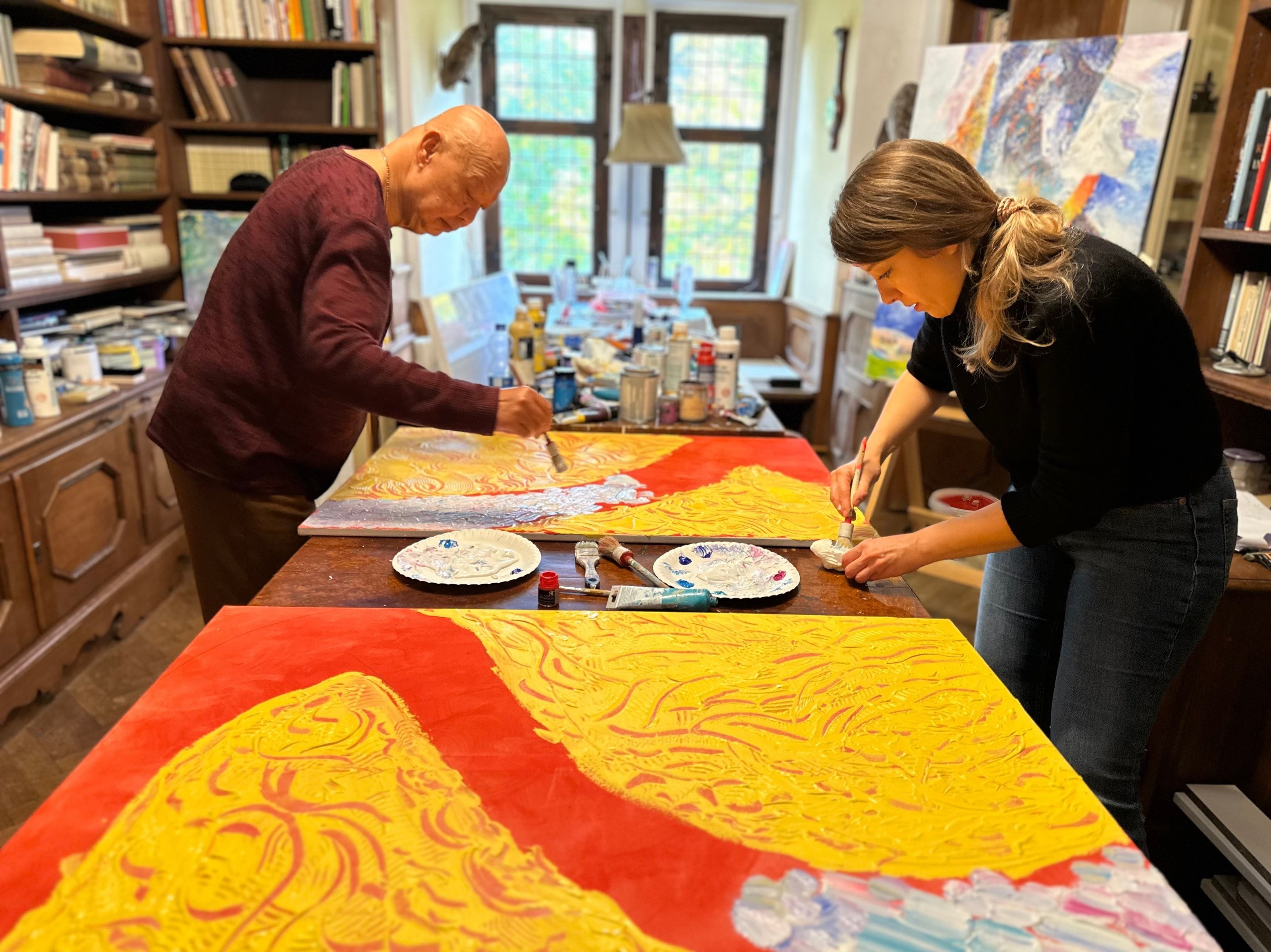
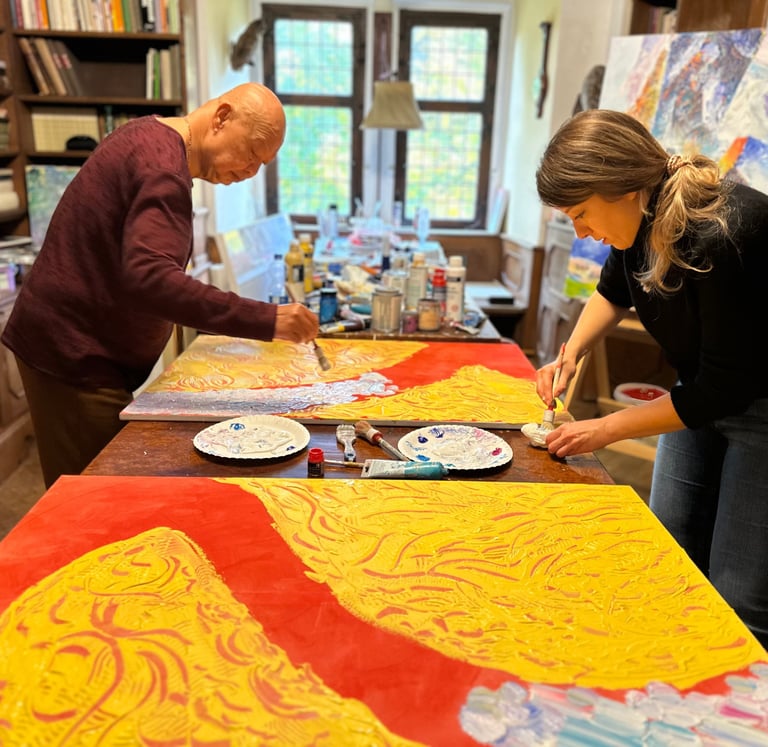
Melek Ismail and Master Amnart Klanprachar, Atelier Schloss Dillich, 2024
ARTISTIC POSITION
Melek Ismail's works move at the intersection of contemporary ritual art, process-based art, and sensory perception.
The starting point is a recurring, ritualized process: the preparation of mocha according to a defined protocol that creates the material conditions under which interpretable structures can emerge.
Melek Ismail works with mocha sediment not as paint but as a material with its own physical laws, a medium that flows, settles, dries, and cracks, sometimes autonomously, sometimes in dialogue with her guidance, but always according to its own material logic.
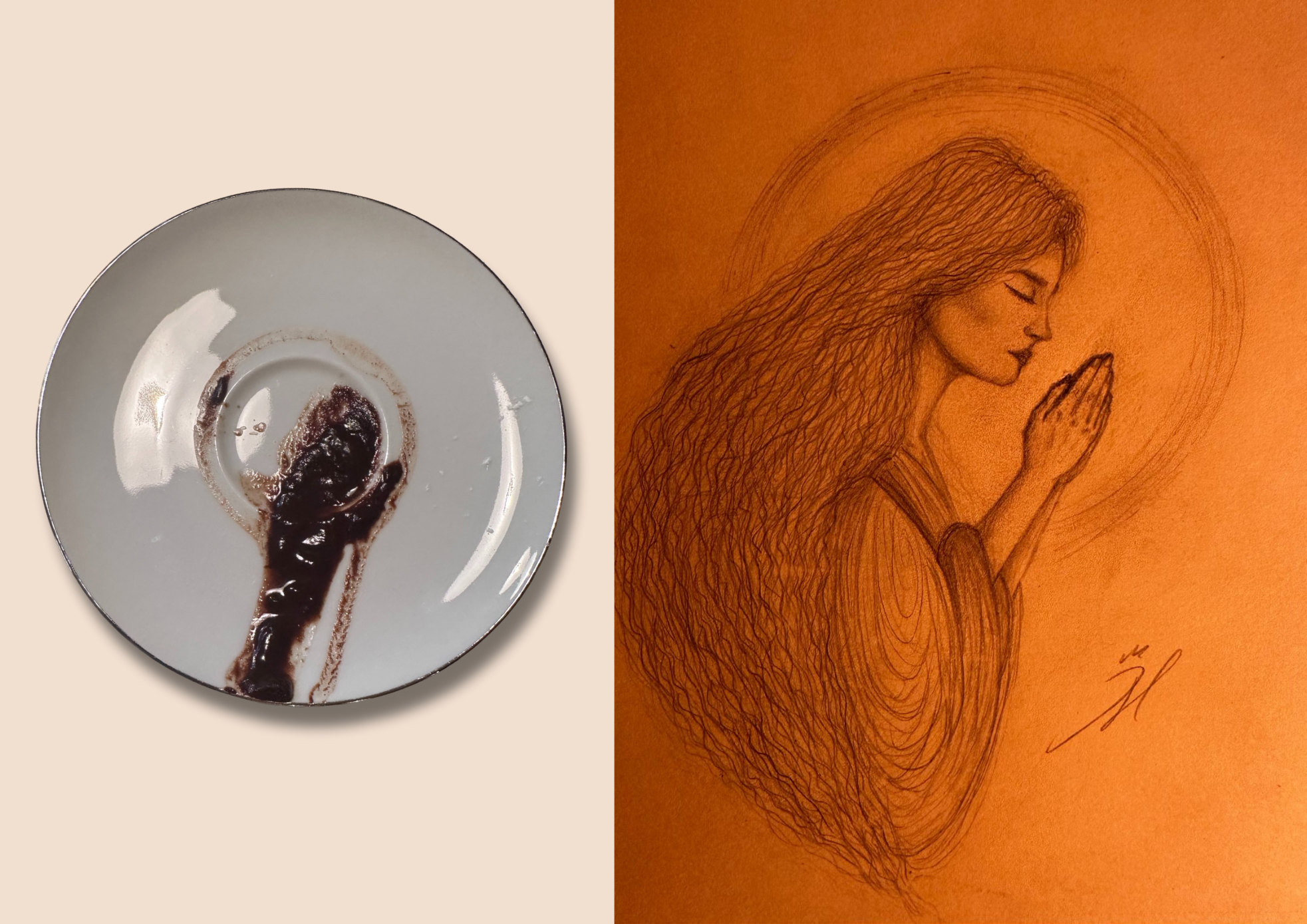
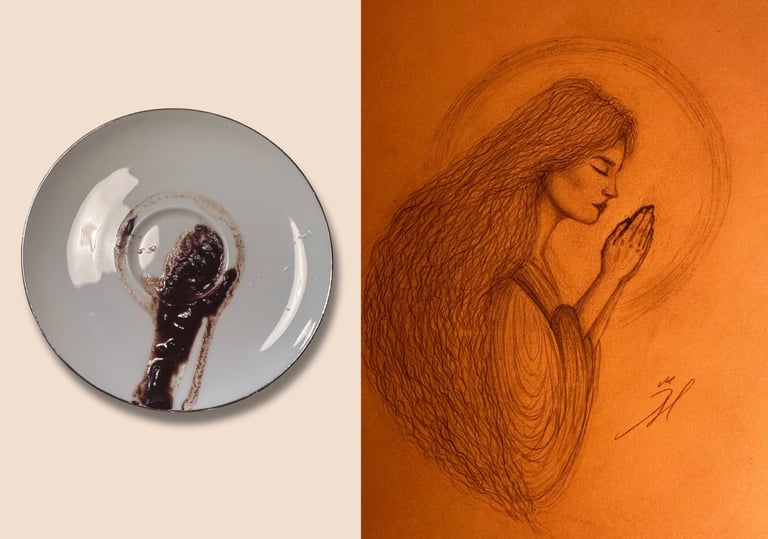
Praying Woman, 2024 – Work Type A: mocha sediment on ceramic saucer (left) and painterly sketch after the reading process (right)
The pictorial form emerges from the interplay of material, time, and interpretive perception. What she recognizes and names within the pattern that has formed is the actual artistic intervention. Not the making, but the reading. This practice is culturally grounded. The interpretation of mocha sediment has been passed down across generations in many cultures. In her work this interpretive practice is methodically activated and transformed into an independent artistic method.
The material carries its own history, sensory, cultural, and processual. This multidimensionality does not manifest in symbols but in the structure of the material itself and in the way it is perceived.
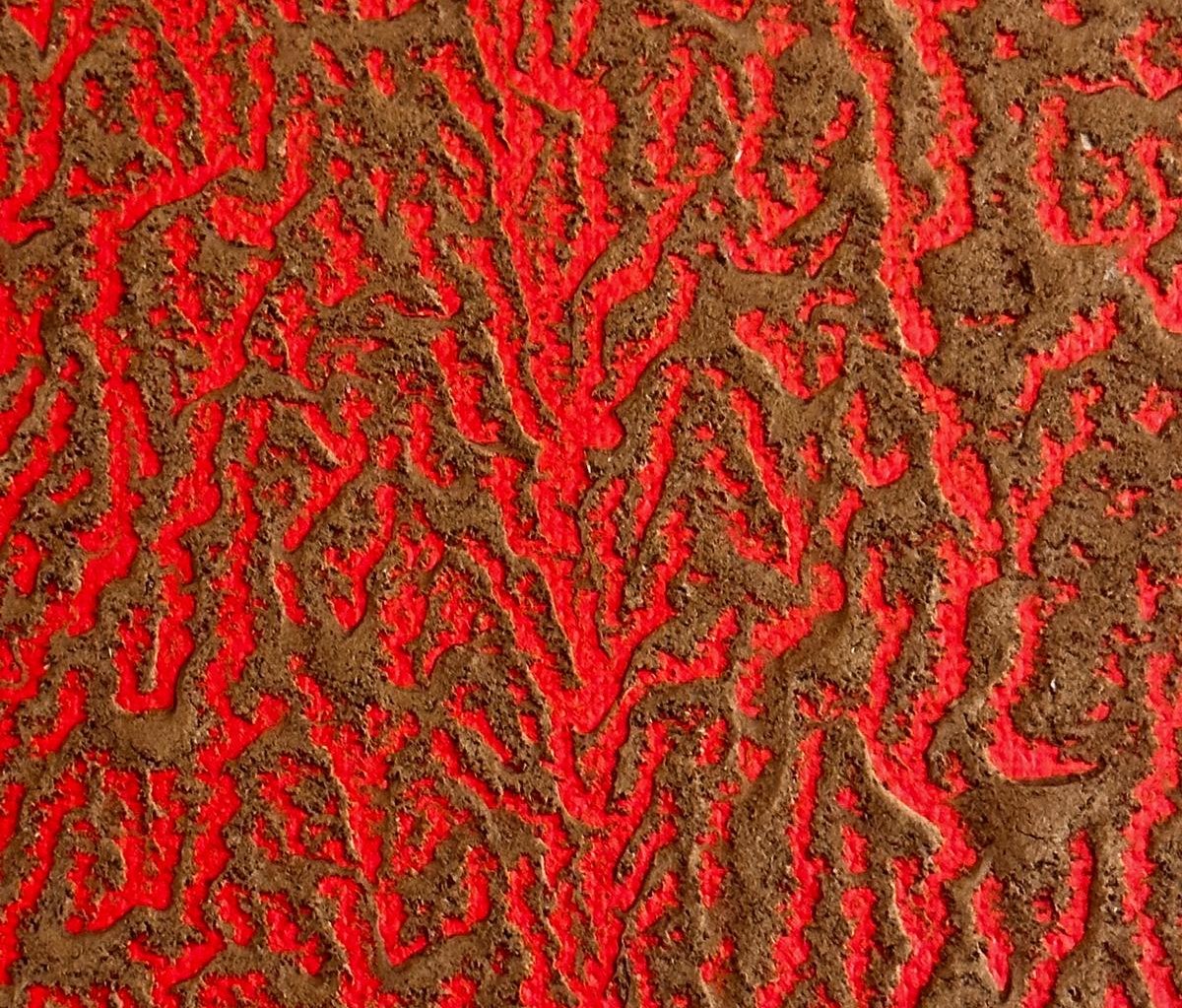
Mocha sediment on red primed canvas, detail view – physically emergent pattern formation